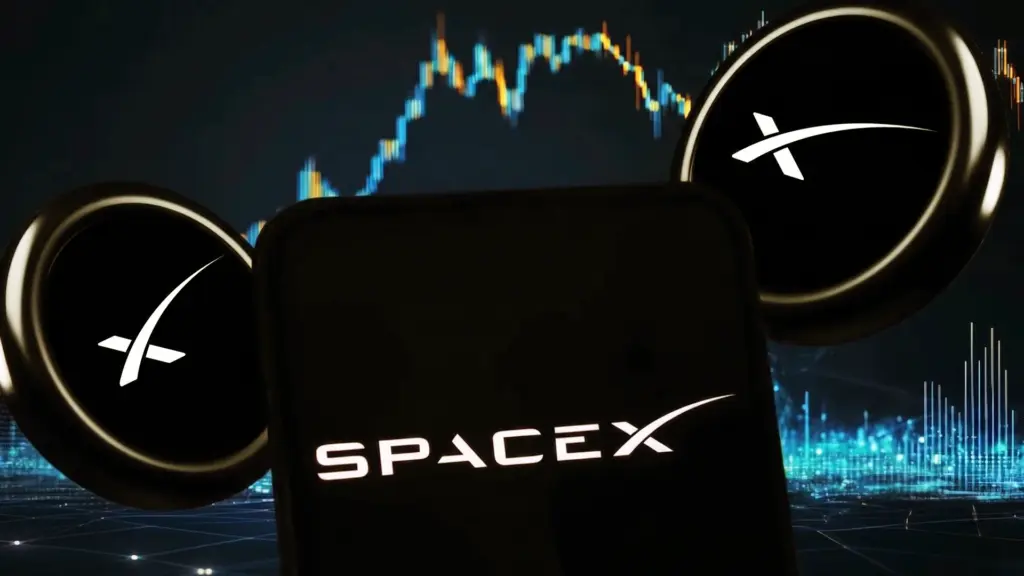
A three-week-old stock now has same-day options. Not on the exchange that lists it, but on a retail broker’s own book.
IG said on 2 July it had extended daily, zero-days-to-expiry (0DTE) options to SpaceX, a year after it became the first firm anywhere to offer same-day options on a single US stock. The interesting part isn’t that IG got there first. It’s why the exchanges couldn’t, and what that gap actually tells you about where single-stock 0DTE is, and isn’t, heading.
The wrapper is the whole story
IG’s SpaceX contracts aren’t exchange-listed options. They are spread bets and CFDs: instruments IG creates itself, referencing an underlying price rather than a centrally cleared contract. That distinction is the entire reason IG has been first to market twice.
A listed option has to clear a chain of approvals before a new expiry can trade. The exchange writes a rule, the SEC signs it off, a clearing house stands behind the contract.
A CFD skips all of it. IG references SpaceX’s price and settles the difference in cash, so it can invent a daily expiry whenever it likes, in whichever jurisdiction it operates, without waiting on anyone. Its SpaceX 0DTE options run Monday to Thursday and settle at the US market close, with Friday left to IG’s existing weekly contracts.
That isn’t a product-development edge. It’s a structural one. When a broker’s instrument is its own creation, “world’s first” is a claim about regulatory reach, not about invention.
SpaceX is the cleanest proof of the point
The exchanges are not standing still on short-dated single-stock options. Since 26 January, under a rule change the SEC approved, Nasdaq has listed Monday and Wednesday expiries alongside the usual Friday cycle for the Magnificent Seven, Broadcom and the iShares Bitcoin Trust. The gap between listed and broker-made 0DTE is closing.
Just not for SpaceX. That rule applies to large, established names with a long options record. SpaceX listed on Nasdaq under the ticker SPCX on 12 June, at a valuation of roughly $1.77 trillion, and was barely three weeks public when IG’s announcement landed. It comes nowhere near qualifying, and wouldn’t even if Nasdaq wanted it to.
So the newest, most-watched listing on the market is exactly the name an exchange can’t touch with a same-day contract, and exactly the name a CFD wrapper can. IG’s first-mover status is widest precisely where the regulatory moat is deepest.
The demand IG is citing is index demand
The launch is being read against a broader shift to ultra-short-dated trading, and the framing deserves a closer look. In the US, 0DTE index options now account for more than half of daily options volume, IG said. That figure is real: Cboe recorded a record 62.4% same-day share of its S&P 500 index options in August 2025, averaging around 2.4 million contracts a day.
But that’s the index story, and single stocks haven’t followed it. Catherine Clay, Cboe’s global head of derivatives, put single-stock 0DTE closer to exchange-traded fund options than to any challenge to SPX’s dominance. The behaviour that made index 0DTE the majority of a huge market hasn’t transferred to individual names at anything like the same pace.
Geography narrows it again. European venues traded 47.6 million single-stock and index options lots in June 2025, against 1.1 billion in the US the same month, on Cboe data cited by FOW. IG is a UK-first broker attaching a US-market structure to a US listing, for a UK client base.
Put those together and IG’s own supporting number, a 33% rise in UK client options trading over two years, reads as what it is: house data describing a book growing off a low base, not evidence that single-stock 0DTE has arrived as a market.
And it’s blended data. IG hasn’t broken out how its SpaceX or Tesla contracts trade on their own, which is the one figure that would show genuine single-stock demand rather than options appetite in general. Until a broker or an exchange publishes that split, the “surging interest” line rests on the aggregate.
What the product is actually for
Strip away the “world’s first” and a daily SpaceX contract is a tactical intraday bet on a volatile listing only weeks old, sold to retail as CFD options through a wrapper the seller controls end to end.
IG discloses the outcome that goes with every CFD it sells: 68% of retail investor accounts lose money trading CFDs on its platform, per its standard regulatory disclosure. That figure is not a footnote. It describes who the product is built for. A one-day expiry compresses the window in which a position has to be right, on a stock whose price history is measured in weeks.
None of that makes the launch reckless or the disclosure inadequate. IG is doing exactly what its instrument set lets it do, and doing it faster than a cleared market can move. The point is narrower, and it is aimed at the framing rather than the firm: being first here is a function of the wrapper and the hype around a single ticker, not a signal that the underlying market has turned.
What to actually watch
The question that matters is not which broker lists the next “world’s first” on the next hot name. A CFD desk can always win that race, because it is not really a race. It is a regulatory shortcut.
The signal to watch is whether single-stock 0DTE volume ever converges on the index numbers that made 0DTE a genuine structural shift, or whether it stays where Clay put it, closer to a niche than a phenomenon. IG has said it will extend the daily format to more large US stocks. More IG daily options, on more tickers, will produce more headlines. They won’t, on their own, answer the only question that counts.
Until it does, the SpaceX launch is a story about IG’s plumbing, not about the market. A broker selling an instrument it invents itself will always be first. That is the whole of the achievement.