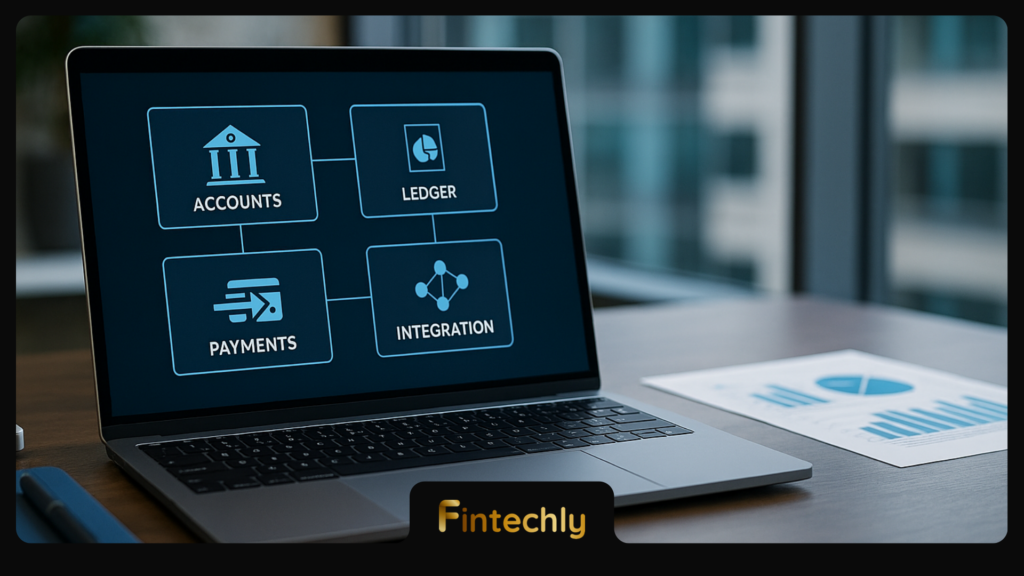
A core banking system is the software layer that runs a bank’s day-to-day money logic. It opens and manages accounts. It posts transactions. It keeps balances accurate. It also connects to payments, cards, channels, and reporting.
For years, many banks ran these functions on older platforms. That is changing fast. Customers now expect real-time updates. Regulators expect stronger controls. And new products need faster launches.
What is a core banking system?
A core banking system is the “system of record” for deposit and lending products. It stores customer and account data. It applies product rules. It calculates interest and fees. It posts entries to the ledger. It then exposes the results to channels like mobile apps, branches, and contact centers.
In simple terms, it answers these questions all day:
- Who owns the account?
- What product rules apply?
- How much money is available right now?
- What changed after each transaction?
Why the core matters in financial infrastructure
Core banking sits at the center of financial infrastructure. If it is slow, every channel feels slow. If it is rigid, product teams move slowly. If it has weak controls, risk rises.
Modern cores also act like a platform. They do not just “keep score.” They help banks build new services. That includes embedded finance, instant payouts, and smarter credit decisions.
Key building blocks inside a core banking system
Different vendors use different names. But most core platforms share the same parts. Understanding them helps you spot where change is happening.
1) Customer and account management
This is where the bank creates and maintains records. It includes customers, accounts, mandates, and limits. It also includes product setup such as checking, savings, term deposits, and loans.
Common capabilities include:
- Customer profiles and identifiers
- KYC and onboarding data links
- Account lifecycle events (open, freeze, close)
- Product rules, fees, and eligibility
2) The ledger: the “truth” of money
The ledger is the book of record. It captures every posting as debits and credits. It supports audit trails. It supports reconciliation. It is also the base for financial reporting.
Many cores use a double-entry model. That helps keep totals consistent. It also makes errors easier to detect.
Good ledger design is not optional. It is how a bank proves balances, supports audits, and resolves disputes.
3) Transaction posting and batch vs real time
Older cores often post in batches. That means updates happen on a schedule. Customers may see “pending” states for hours.
Modern cores post in near real time. They also publish events. That lets other systems react fast. For example, a fraud engine can act the moment a transfer is created.
4) Payments and money movement
Core banking does not replace payment rails. But it must support them. It must reserve funds, update balances, and store payment states.
This is where many modernization programs start. Real-time payments raise the bar. Settlement windows are shorter. Exceptions need faster handling. To understand the flow end to end, see this guide on core banking payments flow.
Payments also depend on modern message formats. Many markets are moving to richer data standards like the ISO 20022 messaging standard. That impacts validations, screening, and reconciliation.
5) Integrations: channels, cards, and partners
No core works alone. It must integrate with channels like mobile and web. It must integrate with card processors. It must integrate with risk tools, data platforms, and CRM systems.
Most banks now use APIs for this. That brings speed. It also brings security work. Weak APIs can become an easy entry point. This is why teams focus on core banking integrations and API security during upgrades.
How a core banking system supports common products
A core banking system is product-driven. Each product has rules. Each rule impacts ledger postings and customer experience.
Deposit accounts (checking and savings)
For deposits, the core manages balances, holds, and interest. It must handle overdrafts. It must handle account limits. It must also support statements and disclosures.
Loans and credit
For lending, the core manages schedules, accruals, and repayments. It applies fees. It calculates interest. It handles delinquency logic. It also supports restructures and payoffs.
Time deposits
For term products, the core manages maturity dates. It calculates fixed or tiered rates. It also supports early withdrawals and penalties.
Why core banking modernization is accelerating
Modernization is not just a “tech refresh.” It is now tied to growth, resilience, and compliance. Several forces are pushing change at the same time.
Customer expectations moved to instant
Customers expect 24/7 banking. They expect balances to update fast. They also expect smooth dispute handling. Batch systems struggle with this pace.
Real-time payments and always-on operations
Many countries are expanding instant payment schemes. This reduces tolerance for downtime. It also increases the need for straight-through processing.
Global standards and oversight also shape these rails. The BIS Principles for Financial Market Infrastructures are often referenced in payment system design and risk management. Banks must align their operations to that reality.
Open banking and embedded finance
APIs have changed distribution. Banks now serve partners as well as consumers. That means more transactions, more integration points, and more demand for clean data.
In many programs, the core becomes the backbone for Banking-as-a-Service models. That requires strong controls around limits, sub-ledgers, and reconciliation.
Regulatory pressure and financial crime controls
Faster payments can increase fraud risk. More integrations can increase attack surface. That pushes banks to improve monitoring, auditability, and data quality.
Modern cores help by publishing better events and richer metadata. But success also depends on connected controls. Many firms are investing in stronger prevention strategies, such as those covered in core banking risk controls and financial crime prevention.
Cloud and cost pressure
Many older platforms run on expensive infrastructure. They also require specialized skills. Cloud-native cores can reduce some of that cost. They can also improve resilience if designed well.
Still, cloud is not a magic fix. Poor design can move old problems to a new place. Banks need clear performance, security, and exit plans.
Product speed and competition
Neobanks and fintechs ship features quickly. They often start with modern cores. That puts pressure on incumbents to shorten release cycles.
Modern cores support configuration over custom code. They also support modular services. That makes change safer and faster.
Modern core architectures: what “modern” usually means
Modernization can mean several things. The best approach depends on the bank’s size, risk appetite, and roadmap.
API-first design
API-first cores expose functions in a consistent way. That helps channels and partners. It also helps governance and testing. Good API catalogs reduce “point-to-point” chaos.
Event-driven processing
Event-driven systems publish changes as they happen. Downstream systems subscribe. This can reduce tight coupling. It also supports better real-time monitoring.
Composable and modular components
Some banks adopt a modular approach. They keep the ledger in one place. They run product engines in another. They add a payment hub and an integration layer. The goal is to avoid a single, massive upgrade every decade.
Integration points you should map before any migration
Core replacement projects fail most often at the edges. The core may be solid. But the connections are complex. Mapping them early reduces surprises.
- Channels: mobile, web, branch, call center
- Payments: ACH, wires, RTP, SEPA, card funding
- Cards: debit and credit processors, tokenization, chargebacks
- Risk and compliance: sanctions screening, AML monitoring, fraud tools
- Data: warehouse, lakehouse, analytics, reporting
- Operations: case management, reconciliation tools, GL reporting
Common modernization paths (and when they fit)
There is no single “right” plan. Most banks choose one of these paths. Some combine them.
1) Wrap the existing core
This adds APIs and an integration layer on top. It can be quick. It also reduces direct changes to the legacy platform. But it may not solve deep limits like batch posting or rigid product setup.
2) Carve out products
This moves a product line to a new core. For example, new deposits, then new lending. It reduces risk by shrinking the migration scope. It also supports a gradual learning curve.
3) Replace the core
This is the “big bang” approach. It can deliver a clean target state. But it carries high execution risk. Data conversion, cutover timing, and parallel run become critical.
4) Greenfield digital bank
Some incumbents build a new brand on a modern core. This avoids heavy migration at the start. It also builds internal experience. Later, lessons can inform the main bank platform.
What to look for when evaluating a core banking system
Feature checklists are not enough. The real risks are operational and structural. These questions help teams compare platforms.
- Ledger strength: clear posting model, audit trails, strong reconciliation support
- Real-time support: reservation, holds, and state transitions without batch reliance
- Configurability: products, fees, limits, and workflows without heavy custom code
- Integration maturity: stable APIs, versioning, sandbox, good documentation
- Resilience: proven uptime patterns, clear RTO/RPO, safe release processes
- Data access: event streams, reporting extracts, and lineage
- Security: encryption, secrets management, access controls, strong logging
Core banking and data: why clean records matter more now
Modern cores generate more data. They also expose it faster. That creates value only if the data is consistent. Duplicate customers, unclear identifiers, and messy product codes slow everything down.
Banks that modernize well often start with data discipline. They define a canonical customer ID. They standardize product hierarchies. They also improve reference data and validation rules.
FAQs
What is the difference between a core banking system and a general ledger?
A core banking system runs product logic for deposits and loans. A general ledger (GL) supports financial accounting and reporting across the whole bank. Many cores feed the GL through summaries and mapping rules.
Does a core banking system process payments?
It supports payment processing by checking funds, placing holds, posting entries, and tracking status. But payment rails and payment hubs often handle routing, network rules, and settlement messaging.
Why do core banking migrations take so long?
The core connects to many systems. It also holds years of data. Banks must migrate balances, history, and product rules safely. They often run old and new systems in parallel to reduce risk.
Can a bank modernize core banking without replacing the core?
Yes. Many banks add an API layer, a payment hub, and better data pipelines first. This can improve customer experience while a longer core replacement plan is built.
How does modernization improve risk and compliance?
Modern platforms can provide richer transaction data and cleaner audit trails. They also support faster monitoring through events. That helps fraud and AML teams respond sooner.
Conclusion: the core is becoming a platform
The core banking system is no longer just a back-office engine. It is becoming a platform for products, data, and partnerships. That is why modernization is accelerating.
Banks that get it right focus on the basics first. They strengthen the ledger. They simplify products. They map integrations early. And they plan for always-on payments and security from day one.