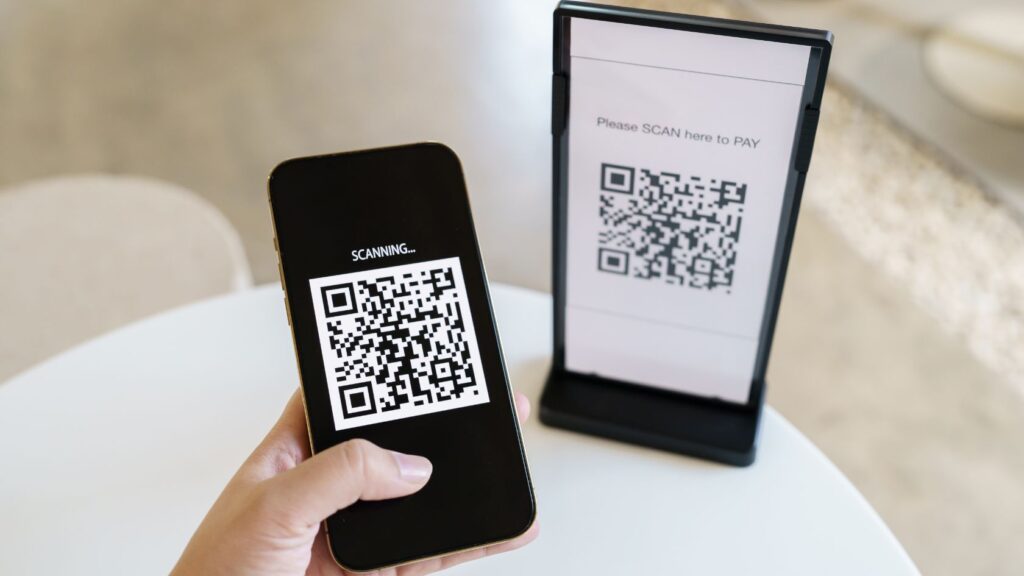
In 2024, US government agencies moved $183.2 billion onto general-use prepaid cards across roughly 1,200 separate programmes, according to the Federal Reserve. That is one slice of a shift the payments industry spent two decades ignoring.
For years the hard engineering problem was pay-in: how to accept money faster, cheaper and from more places. Paying money out was an afterthought, handled by cheques and next-day bank files.
That has flipped. Getting funds to a named recipient quickly is now a competitive product in its own right, and the disbursement card is its most visible form.
The card, though, is the part that matters least. Underneath the plastic sits a contest over which rail carries the money, and the answer increasingly is not a card at all.
Why outbound became the hard part
A payout has always been technically simple and operationally miserable. Cheques take days to arrive and clear, invite fraud, and assume the recipient has a fixed address.
An ACH transfer is cheap but settles in one to three business days and needs the recipient’s routing and account numbers, which people rarely have to hand when they are filing a claim or accepting a gig payout.
Push-to-card removed most of that friction by anchoring the payout to the card rather than the account. A business initiates the payment and the funds land on the recipient’s existing debit or prepaid card.
Visa’s rails, Visa Direct, reach more than 195 countries and 160 currencies; Mastercard Send covers a similar footprint. In the US, Visa requires card issuers to make funds available within 30 minutes of approving the transaction.
That single capability, funds on a card in minutes with only a card number, is what turned disbursement into a category rather than a back-office task.
Four demand pools then made it a growth market.
Disaster relief, paying people when the systems are down
The clearest driver is climate.
NOAA’s National Centers for Environmental Information counted an average of 3.3 separate billion-dollar weather and climate disasters a year in the 1980s, adjusted for inflation. In 2024 the US logged 27 of them, costing $182.7 billion, the fourth-costliest year on record.
NOAA ceased updating that database in May 2025 under federal spending cuts, which makes 2024 the last full year it published and leaves the private sector to track the trend itself.
More frequent disasters mean more emergency disbursement, often to people whose normal banking has been disrupted.
A prepaid card can be issued without a bank account, activated on the spot, and loaded remotely, which is exactly the profile a displaced household needs. It also lets the issuer restrict where the money is spent, a real requirement for relief funds.
The public rails are catching up too: in 2025 the US Treasury’s Digital Payout Program routed its first FEMA disaster-relief instant disbursement over FedNow, a signal that emergency payouts are moving from cards toward real-time account credits.
The gig payout, and a definitional trap
The second pool is contract and gig work, and here the headline numbers deserve scepticism.
Widely cited forecasts put more than 70 million Americans freelancing today, rising to about 90 million by 2028. Those figures use a broad definition that counts anyone who did any freelance or independent work during the year, including occasional side income.
The US Bureau of Labor Statistics, using a narrower “primary job” test, produces far smaller counts. MBO Partners, which tracks full-time independents specifically, put that group at 27.7 million in 2024.
The senior reader should treat the 90 million figure as a participation ceiling, not a payroll.
The number that actually drives card demand is not headcount but expectation. Gig platforms compete on instant pay, and a prepaid card became the natural endpoint for earnings that hit after every shift.
DoorDash ran DasherDirect, a no-fee prepaid Visa with instant payout, before retiring it in April 2025 and moving drivers to a successor programme, DoorDash Crimson. Uber offers the Uber Pro Card on the same logic.
The card here is a retention tool disguised as a payment method. It holds the worker’s balance and pays cashback on fuel, which makes leaving the platform a little less convenient.
Government cards, a modernisation problem worth $183bn
Beyond disaster relief, routine government benefits are the largest single segment. The Federal Reserve’s $183.2 billion figure for 2024 splits into $141.0 billion across state and local programmes and $42.2 billion federal.
The forcing function now is fraud. Card skimming on magnetic-stripe benefit cards drove a wave of theft, and the USDA has replaced nearly $95 million in stolen SNAP benefits since January 2023.
The industry finalised a chip standard for benefit cards, X9.58-2024, in August 2024, clearing the way for states to migrate SNAP off the stripe.
Benefit cards also expose the limit of how these cards control spending. Most restrictions today run on the merchant category code, the four-digit tag that says what kind of business a merchant is.
That is blunt: it can block a liquor store but cannot stop a SNAP recipient buying an ineligible item inside an approved grocery.
Programmes such as SNAP and WIC need eligibility at the item level, which is why the next design frontier is basket-level control rather than category-level. That is a genuine gap, not a vendor talking point.
Insurance turns speed into a retention lever
The fourth pool is insurance, where payout speed has quietly become a competitive weapon.
Visa’s own material notes policyholders wait six to 10 days for an insurance cheque. Push-to-card collapses that to minutes.
The digital insurers built the case: Lemonade says it approves and pays around 40% of claims instantly, some in as little as three seconds.
For a carrier, a claim paid in seconds is a measurable retention and satisfaction lever, and a slow cheque is a reason to switch. Once one insurer in a line pays instantly, the pressure on the rest is one-directional.
The real contest, cards or rails or stablecoins
Put the four segments together and the market looks like a card story. Look closer and the card is being squeezed from both sides by faster rails.
| Payout rail | Typical speed | Reach | Note |
|---|---|---|---|
| Cheque | 6 to 10 days | Any postal address | Costly, fraud-prone |
| ACH | 1 to 3 business days | US bank accounts | Cheap, slow |
| Push-to-card | Funds within 30 minutes | 195+ countries | Needs a card number |
| RTP / FedNow | Seconds, 24/7 | Accounts at participating banks | Account-to-account |
| Stablecoin (e.g. USDC) | Minutes, cross-border | A digital wallet | Pilot stage, rules still forming |
Speed and reach figures per Visa, the Federal Reserve and network disclosures, mid-2026.
The account-to-account instant rails are scaling fast. FedNow processed about $245 billion in the second quarter of 2025, and The Clearing House’s RTP network handled $405 billion in the fourth quarter, up from $80 billion a year earlier.
Where a recipient has a bank account at a participating institution, a real-time credit is faster and cheaper than issuing a card.
For cross-border payouts, stablecoins are the emerging threat: Visa is piloting stablecoin payouts through Visa Direct, announced in November 2025, letting businesses fund in fiat while gig workers and creators in underbanked regions receive USDC, with broader rollout planned for the second half of 2026.
Stablecoins settled around $28 trillion in real economic activity in 2025, per Chainalysis, and the networks are now building stablecoin settlement into their own stacks.
The pattern is not only American, and outside the US the card is often skipped altogether.
India’s government pushes welfare through its Direct Benefit Transfer scheme straight into Aadhaar-linked bank accounts over the Aadhaar Payment Bridge, largely bypassing cards, and it dropped the debit-card requirement for UPI registration in 2022.
Brazil’s Pix, the UAE’s Aani platform, launched in October 2023 and moving money to any bank account by mobile number in under 10 seconds, the EU’s SEPA Instant and the UK’s Faster Payments all do the same job across Europe and other markets.
Where a country has already built a real-time account rail, government and gig payouts tend to route through it, and the disbursement card never gets a look-in.
The read for anyone building in this space: do not bet the business on the card.
The durable position is the disbursement platform that treats the card as one endpoint among several and routes each payout to the cheapest rail that reaches the recipient fast enough.
The card wins where the recipient has no account and needs spending controls, which is precisely the relief and benefits case. It loses to RTP where a bank account exists, and to stablecoins where the payout crosses a border into a thin banking market.
What a disbursement programme actually has to solve
Strip out the marketing and every one of these segments is the same engineering problem in different clothing: reach a recipient who may have no bank account, move the money in seconds rather than days, restrict where it can be spent when the funder requires it, screen for fraud and sanctions in real time, and do it across borders, jurisdictions and currencies. The plastic is the least interesting part of that list, and the least defensible.
Disbursement cards are not a niche prepaid product having a good year. They are the visible edge of institutions being forced to pay people faster than their legacy plumbing was built to allow.
The forces pushing them, more disasters, more contract workers, more benefit fraud, more instant-payout competition in insurance, are structural and are not reversing.
Whoever owns the routing decision underneath the card, not the card itself, owns the market this becomes.