The UAE’s fintech scene is growing fast, with $486 million invested in the first quarter of 2026, placing it 3rd in fintech funding worldwide and underscoring strong UAE fintech investment trends. At the same time, global investors continue to pour billions into artificial intelligence, digital assets, and financial infrastructure as they search for the next generation of transformative businesses.
Yet despite record levels of innovation, venture capital has become increasingly selective. Investors are no longer chasing growth at any cost. Instead, they are looking for businesses with strong fundamentals, defensible technology, clear regulatory pathways, and sustainable commercial models.
For fintech founders, particularly those building in the digital finance space, this raises critical questions.
Where are investors still seeing untapped opportunities?
Which areas of digital finance remain underserved?
How will AI reshape the competitive landscape?
And what separates fundable startups from those that struggle to secure capital?
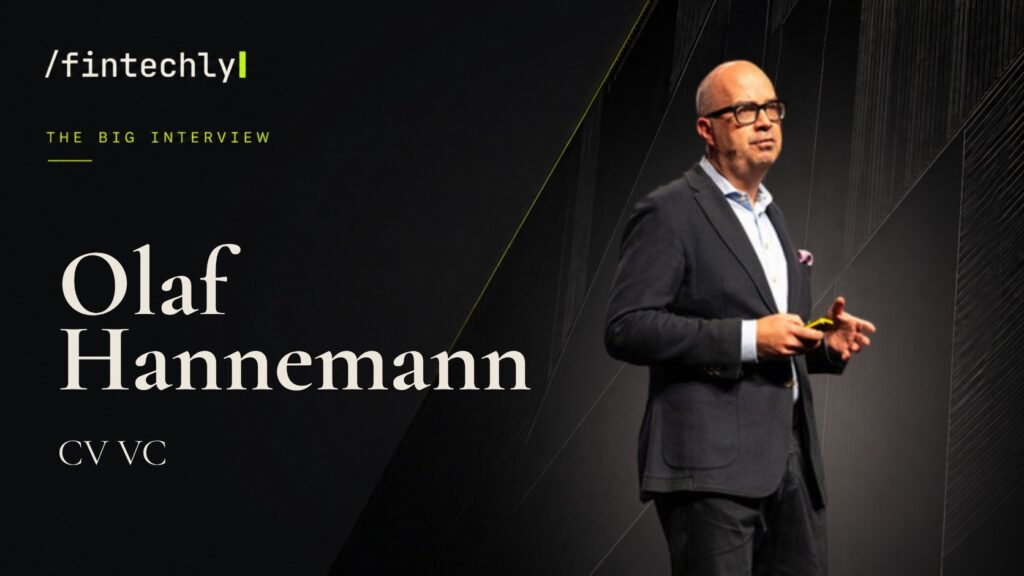
To find out, Fintechly spoke with Olaf Hannemann, Co-Founder of CV VC, a Swiss-headquartered, globally focused seed-stage venture capital firm investing in blockchain, artificial intelligence, and frontier technologies.
In this exclusive interview, Olaf shares his insights on the future of fintech investing, the rise of AI-native financial services, the growing role of digital identity infrastructure, and the fundraising mistakes founders continue to make.
Q&A With Olaf Hannemann

Q1. When evaluating markets as an investor, what signals indicate that a fintech ecosystem is ready for venture investment?
Olaf Hannemann: “The first thing we look at is regulatory clarity. It doesn’t necessarily have to be easy regulation, but it needs to be predictable. Investors and founders can work with regulations if they know the rules of the game.”
He explained that beyond regulation, investors seek evidence of a functioning ecosystem.
Olaf Hannemann: “You need talent. You need capital. And you need an environment where startups can actually test ideas, find customers and build partnerships. When those elements come together, you begin to see sustainable innovation rather than isolated success stories.”
He noted that the UAE has made significant progress in building these foundations, which have helped attract both entrepreneurs and international investors.
Q2. Where is the white space in UAE digital finance?
Olaf Hannemann: “A lot of the obvious areas have become crowded. Payments, wallets, digital banking and embedded finance attract significant attention because they are visible and easy to understand.”
Rather than focusing on those segments, Hannemann believes some of the most attractive opportunities exist in the infrastructure layer.
Olaf Hannemann: “We are particularly interested in compliance technologies, forensic tools and specialised payment solutions. As digital assets and digital transactions become more common, there will be a growing need for systems that help monitor activity, manage compliance and provide transparency.”
He also highlighted industry-specific payment solutions and the opportunity for startups not to compete with global B2B payment rails, but to go where they will not: into a specific sector, geography, or use case; understand its particular friction points and regulatory requirements; and build rails that are genuinely superior for that context.
Related Reading: CV VC’s Investment Thesis on Digital Finance Infrastructure

Many of the themes discussed by Olaf Hannemann in this interview are explored in greater detail in a recent research paper published by CV VC. The report identifies three areas where the firm is actively deploying capital: compliance infrastructure for on-chain finance, specialised payment ecosystems serving underserved markets, and on-chain identity and credentialing solutions. Together, these sectors represent what CV VC believes could become critical infrastructure layers for the next generation of digital financial services.
Q3. How important do you believe identity and credentialing infrastructure will become over the next five years?
Olaf Hannemann: “I think it will become one of the most important infrastructure layers in the digital economy.”
According to Hannemann, the rise of AI makes trust and verification increasingly critical.
Olaf Hannemann: “As more decisions are made digitally and more interactions happen between machines, we need systems that can verify who owns data, who has access rights, and whether information can be trusted.”
He believes identity infrastructure will play a central role not only in financial services but also across healthcare, government services and digital commerce.
Olaf Hannemann: “Identity and credentials are ultimately about trust. Without trust, digital systems cannot scale.”
Q4. From an investor’s perspective, what actually qualifies as an AI-native fintech company?
Olaf Hannemann: “Today, almost every founder says they’re building an AI company. The reality is that using AI tools doesn’t automatically make a business AI-native.”
He explained that investors are becoming more focused on the underlying business model rather than the technology label.
Olaf Hannemann: “What matters is whether the company is solving a real problem and creating something defensible. Through AI, code is increasingly becoming a commodity rather than a barrier to entry. The question is not whether you use AI, but whether you can create lasting value.”
Hannemann noted that as software development becomes faster and cheaper, investors are looking beyond code.
Olaf Hannemann: “We’re evaluating the quality of the problem being solved, access to customers, proprietary data, and the company’s ability to build sustainable advantages.”
He added that fintech, wealthtech, regtech and digital asset businesses are increasingly assessed on their market relevance and defensibility rather than simply their technology stack.
Q5. What proof points matter most to investors in 2026?
Olaf Hannemann: “One of the biggest challenges is that founders spend too much time perfecting products and not enough time validating demand.”
He observed that many entrepreneurs continue refining features while delaying conversations with customers and investors.
Olaf Hannemann: “Investors want evidence. They want to see traction, pilots, customer engagement and proof that the market actually wants what you’re building.”
Another common misconception is that venture capital should always be the first source of funding.
Olaf Hannemann: “There are often grants, accelerators and alternative funding sources that founders should explore before raising equity. The kicker: these can be non-dilutive. Not every company needs venture capital on day one.”
Q6. What’s one piece of advice you would give fintech founders planning to raise capital in the next 12 months?
Olaf Hannemann: “Start early.”
He stressed that fundraising should begin long before a company actually needs capital.
Olaf Hannemann: “The strongest fundraising position is when you don’t urgently need the money. Build relationships with investors early, keep them informed about your progress and create options for yourself.”
He also encouraged founders to view fundraising as a long-term partnership rather than a transaction.
Olaf Hannemann: “Choosing investors is just as important as investors choosing you.”
Final Thoughts
Olaf Hannemann’s perspective highlights solid UAE fintech investment trends entering a new phase of maturity. While AI and digital assets continue to dominate industry conversations, investors are increasingly focused on infrastructure, trust, compliance and execution.
For founders, building a successful fintech company in 2026 requires more than innovative technology. It requires solving meaningful problems, demonstrating market demand and preparing strategically for growth.
As the UAE continues to strengthen its position as a global fintech hub, these insights offer a valuable roadmap for entrepreneurs, investors and industry stakeholders alike.