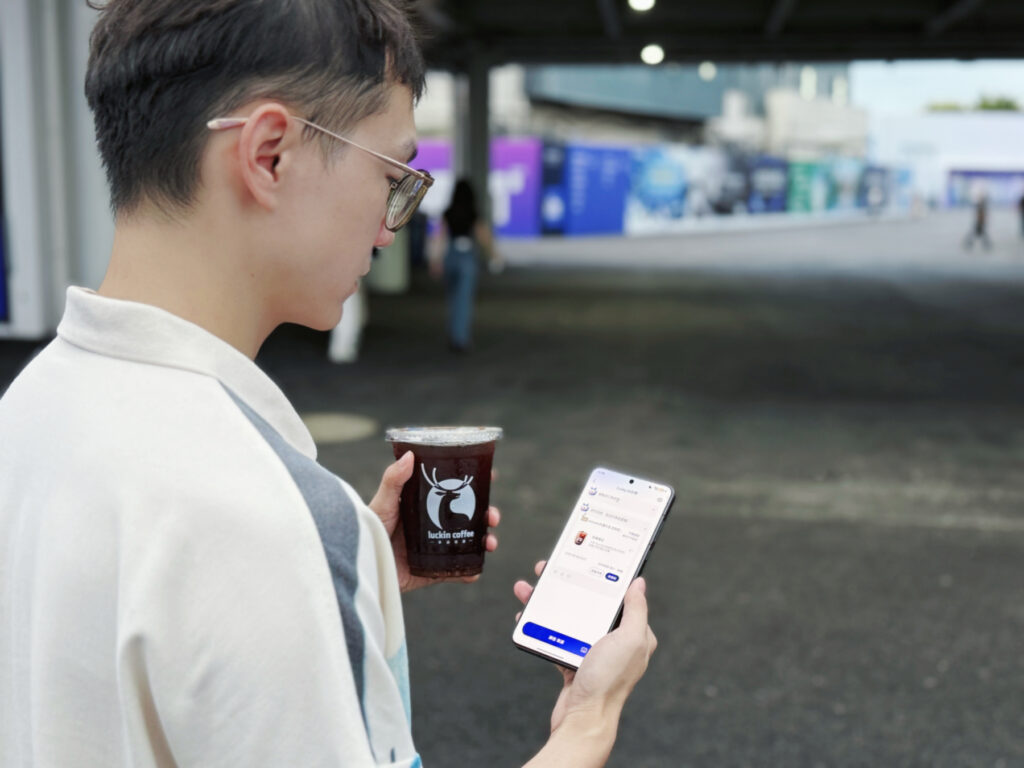
Alipay has introduced two new AI payment services as agent-led commerce begins moving from experimental use cases into live consumer and business transactions.
The company has launched AI Wallet and Token Pay as part of a wider full-stack AI payment solution for partners across AI companies, retailers, developers and digital platforms. The announcement builds on Alipay AI Pay, its consumer-facing AI payment product, and its business-facing AI payment processing product.
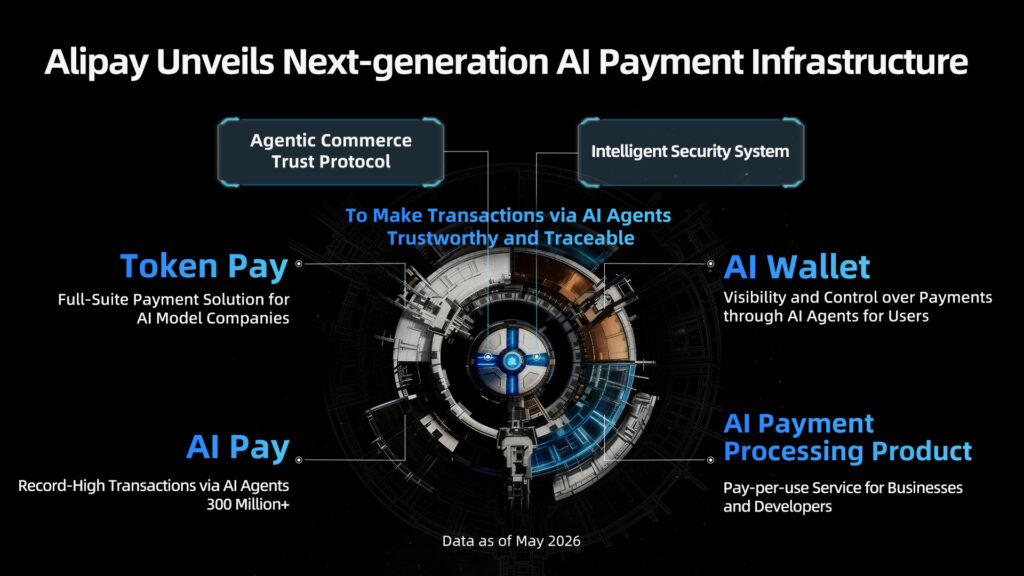
According to Alipay, AI Pay has now processed 300 million transactions to date. The company also says the product passed 100 million users in February 2026, which it describes as the first AI-native payment product globally to reach that scale.
The launch shows how payment companies are beginning to adapt for a market where AI agents do more than search, recommend or compare products. As agents start to complete tasks for users, payment infrastructure has to support consent, control, authentication, risk checks and post-transaction visibility.
“While the essence of commerce remains unchanged in the age of AI, the emergence of AI agents is reshaping everything. Drawing on 22 years of technological expertise and commercial know-how, Alipay is building a new generation of AI payment services to accelerate the growth of the agentic commerce ecosystem,” said Cyril Han, CEO of Ant Group.
AI Wallet adds user oversight
AI Wallet is designed to give Alipay users more visibility over payments made through AI agents.
The product is available in the Alipay app by searching ‘AI Wallet’. It enables consumers to manage tasks carried out by AI agents before and during payment, as well as review and analyse spending afterwards.
Agent-led payments create a different set of questions from standard checkout. A user may give an instruction through voice or text, but the transaction itself may be initiated or completed by an AI agent. That places more weight on how the payment provider records intent, applies controls and shows the user what has happened.
Alipay said AI Pay already lets consumers make transactions through AI agents using voice commands. Its AI payment processing product also allows businesses and developers to monetise services through pay-per-use integration.
Alongside AI Wallet, Alipay has launched what it describes as China’s first Agentic Commerce Trust Protocol with partners. The protocol is intended to create a ‘common language’ between AI and service platforms. The company has also launched an intelligent security system for AI payments, designed to support safeguards for transactions driven by AI agents.
Token Pay targets AI companies
Alipay has also launched Token Pay, a payment service aimed at AI model companies.
The company describes Token Pay as a full-suite solution for global subscription payments, token top-ups in AI agents and related transaction needs. The service is intended to support AI companies as they monetise usage through credits, subscriptions and usage-based payment models.
At the Alipay AI Payment Ecosystem Conference on 26 May, AI model companies MiniMax and Stepfun announced collaborations with Alipay. The companies are adopting Alipay’s AI payment solution for use cases including token top-ups, membership subscriptions and marketing campaigns.
“Payments play a crucial role in enabling tenfold growth in the AI industry,” said Weiqi Hu, VP of MiniMax, “Together with Alipay, we will strengthen collaboration across multiple areas to accelerate the growth of AI commerce.”
For AI model providers and agent platforms, payments are becoming part of the core product experience. A user may need to top up tokens, buy a subscription, pay for a single AI-generated task or allow an agent to complete a transaction inside another service. That creates demand for payment systems that can handle low-friction transactions while still providing traceability and security.
“AI is redefining every layer of commerce. As AI agents begin helping people search for information, shop, order food, and even make money, payments are no longer just the ‘final step’ — they are becoming a capability embedded from the very beginning,” Lin Zhu, general manager of Alipay AI payment business of Ant Group said. “Only when trusted transactions, seamless payments and secure controls are all in place can agentic commerce truly take off.”
Agent commerce moves into wider use cases
Alipay said its AI payment services are now being used across several types of AI-enabled commerce in China.
Use cases include AI agents embedded in apps and mini programmes for retailers such as Luckin Coffee, AI smart glasses from Rokid, consumer-facing AI applications including Alibaba’s Qwen, OpenClaw-type AI agents, smart cockpits, AI development platforms such as Coze and Qoder, and businesses including One Person Companies.
That range of examples shows how agent-led payments may develop across both consumer and business settings. In retail, the payment could sit inside an AI shopping or ordering assistant. In AI development, it could support tokenised access to model usage. In connected devices or smart cockpits, payments may become part of a broader voice or agent-led experience.
Alipay also plans to use its Alipay Tap! smart devices to support the integration of online and offline commerce through AI upgrades. The company has introduced a developer support programme for individual AI developers, offering token incentives and zero payment processing fees.
The announcement comes as payment providers, banks, marketplaces and technology companies test how payments should work when AI agents act on behalf of users. The commercial opportunity is clear, but so are the unanswered questions around authorisation, liability, fraud, user consent and transparency.
Alipay’s latest launch suggests one direction of travel: payments may need to be built into agentic commerce from the start, rather than treated as a final checkout step.