
The Dubai Financial Services Authority (DFSA) has fined the DIFC arm of immigration firm Hayman-Woodward $454,367 (AED 1.67 million) for providing company services for more than six years without the registration the DIFC’s anti-money laundering rules require.
Hayman-Woodward Global Mobility Services (DIFC) acted as a formation agent for companies and provided registered office, business and correspondence addresses for 71 clients between August 2018 and February 2025, the DFSA said on 15 October. It also signed agreements with three free zones outside the DIFC to help clients set up companies there.
Company service providers fall into the category of designated non-financial businesses and professions (DNFBPs), which must register with the DFSA before operating in or from the DIFC. Registration brings them under the DFSA’s anti-money laundering supervision. The firm was never registered or authorised.
The penalty combines a fine with the profits the firm made from the services. Because the firm agreed to settle, the DFSA cut the fine by 30%, reducing the total from $522,047. The DFSA didn’t say how the total splits between fine and disgorgement.
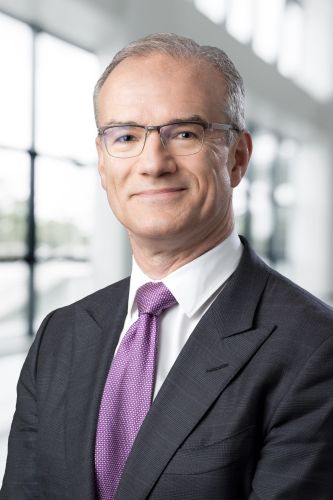
Alan Linning, managing director of enforcement at the DFSA, said:
“The DFSA has zero tolerance for breaches that compromise the integrity of its anti-money laundering regime.” He said operating without registration impairs the regulator’s ability to supervise and reduce financial crime risks.
Why company formation falls under money laundering rules
The DNFBP category comes from international standards set by the Financial Action Task Force (FATF). It covers businesses outside finance that can still be used to move or hide money, such as real estate agents, dealers in precious metals and stones, lawyers, accountants, and trust and company service providers. Registered firms must check who they are dealing with, identify the real owners behind client companies and report suspicious activity.
Company formation is on the list because companies can be used to hide who controls money. The FATF’s guidance for trust and company service providers says shell companies can conceal ownership and lend a front of legitimacy. A joint FATF and Egmont Group study of 106 cases found that companies, mainly shell companies, were a key feature of schemes designed to disguise beneficial ownership.
Hayman-Woodward’s work also reached beyond the DIFC, through agreements with three other free zones to set up companies there. The DFSA’s case covers what it did in or from the DIFC, where it had no registration.
The UAE spent two years on the FATF’s list of jurisdictions under increased monitoring, from March 2022 until it was removed on 23 February 2024 after completing an action plan. Better transparency over who owns companies was among the reforms cited.
It is the DFSA’s second enforcement action this month. On 1 October it fined Vault Wealth $109,200 for providing financial services in the DIFC without authorisation. In Abu Dhabi, ADGM’s Registration Authority fined accounting firm PKF and its audit principal a combined $100,000 in early October for audit failings.
The DFSA has acted against company service providers before. In July 2024 it fined Symphony Services, a registered provider, $300,000 and withdrew its DNFBP registration for misleading and obstructing the regulator. Hayman-Woodward’s case is different: it was never registered at all.
The DFSA hasn’t said whether any of the 71 clients’ companies are under review, or named the three free zones. Gulf News also reported the fine.