

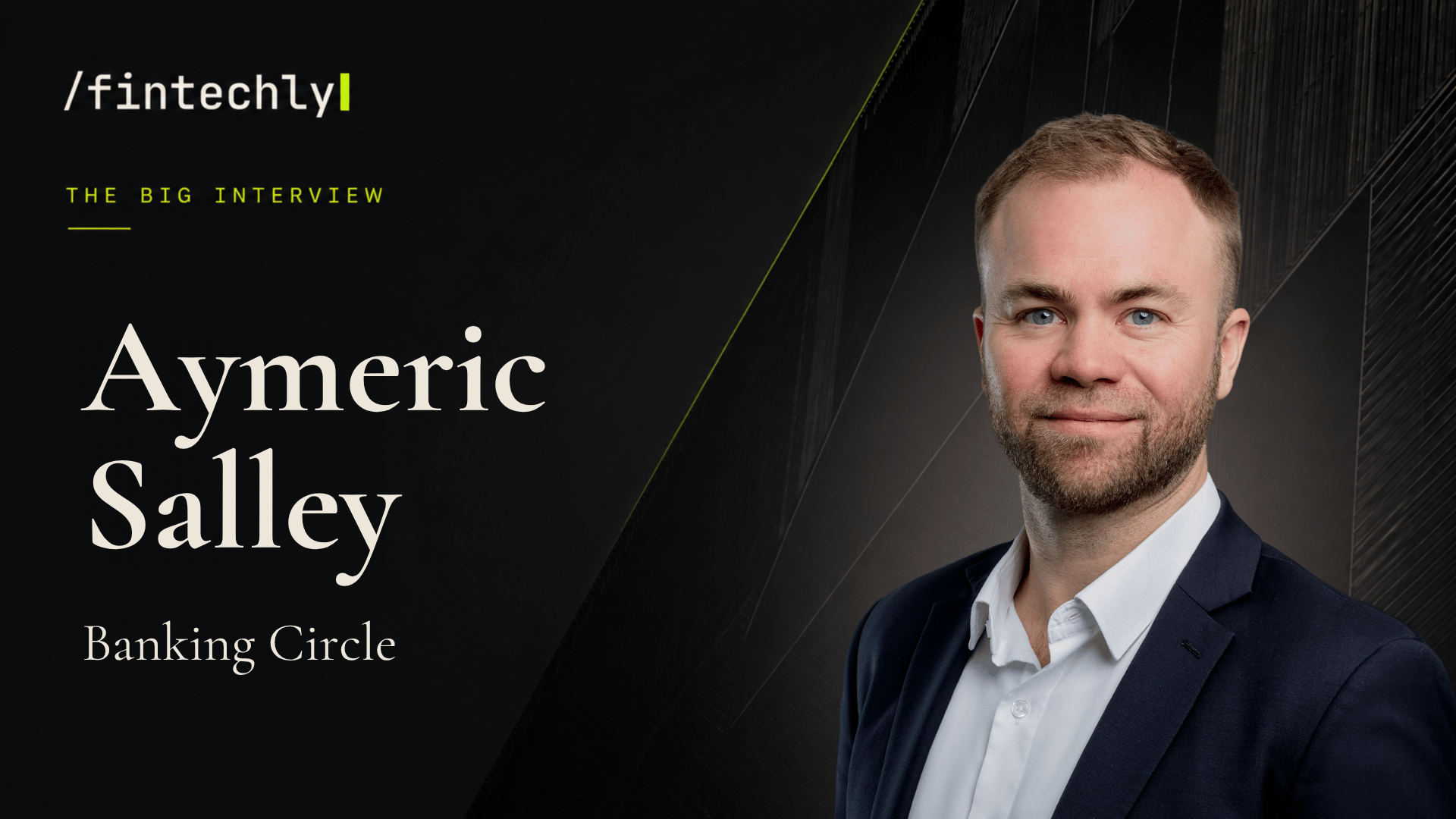
- Who
- Aymeric Salley, Head of Digital Assets Platform at Banking Circle. French, based in Singapore after 15 years in Asia.
- Background
- Paxos, then co-founder of StraitsX (builder of XSGD), then three years leading KPMG Singapore's blockchain practice across APAC.
- The venture
- Banking Circle, a Luxembourg-licensed payments bank, the "bank behind the fintechs." It processed more than €1.5 trillion for clients in 2025 across 24 currencies and 4 stablecoins, serving PSPs, marketplaces and banks.
- Status
- CASP licence granted by the CSSF in April 2026 for stablecoin settlement. First clients are integrating now, with first transactions expected this month.
- Backing
- Owned by EQT since 2018.
- The bet
- Run stablecoins inside the bank, APIs and controls as fiat, so a client treats one like any other currency.
KEY TAKEAWAYS
- 01 Banking Circle has built its digital-asset capability inside the bank, on top of its Luxembourg banking licence with a CASP licence issued by the CSSF on April 2026, so stablecoins leveraging the same risk and control framework applied to its fiat rails It is cleared to settle MiCA-compliant stablecoins
- 02 Salley has built regulated stablecoins since the sector's earliest days: he was at Paxos, then co-founded StraitsX and built XSGD, Singapore's first Singapore-dollar stablecoin, working hand in hand with the Monetary Authority of Singapore (MAS), and sat on its Project Orchid steering committee.
- 03 His read cuts against the hype in a useful way: stablecoins won't replace domestic payment rails or cards, and the real value sits in high-friction cross-border corridors and settling tokenised assets. He calls a stablecoin "the 4x4 of money."
The man who helped build Singapore’s first stablecoin, and five others, is now Banking Circle’s Head of Digital Assets Platform, betting the next wave of stablecoins belongs inside a regulated bank rather than a fintech.
Aymeric Salley moved into blockchain about eight years ago, leaving financial services at PwC when the technology barely had a scene in Singapore. His first job in it was at Paxos, which he calls the first company in the world regulated for any kind of crypto activity: licensed in New York, structured as a trust, “very similar to a banking framework without the ability to lend money.”
That’s where he learned to build institutional-grade infrastructure. He went on to co-found StraitsX and build a Singapore-dollar stablecoin when no framework for one existed. Working with MAS, the team issued an e-money-compliant token on a public ledger, and the work won him a seat on Project Orchid, the central bank’s “purpose-bound money” experiment.
He left after StraitsX raised $100 million in September 2022, one of the last big fintech rounds before rates climbed and funding dried up. The timing shaped him. That year FTX, Terra Luna and Celsius collapsed, and Salley took a contrarian lesson from the wreckage.
“The industry had to reinvent itself and it would come back very strong but more institutional,” he says.
He spent three years at KPMG Singapore advising central banks, commercial banks and fintechs, waiting for the role he was sure would appear: a bank moving part of its business on-chain. Banking Circle offered it.
The bank issued EURI, a bank-issued, MiCA-compliant euro stablecoin, in August 2024, before he arrived.
“We don’t have a digital asset island,” he says. Everything sits under the bank entity, and connects to the core systems.
That means treasury, compliance, risk and legal all have to be trained and brought along. The client meets it through the same APIs and interface as any other product. “Think of a stablecoin as a new currency,” he says. “A blockchain network is just a different settlement network.”
The pitch rests on the licence. Every risk and control framework is bank-grade and reported to the regulator, which Salley argues matters more as cyber-attacks intensify. He points to a run of security incidents, “almost one a day since January” as AI sharpens the tools available to attackers, and expects value to move towards tier-one custodians and banks that can offer the same experience with stronger controls.
The build is staged by design. The CASP licence covers settlement first, letting the bank convert MiCA regulated stablecoins to fiat and visa-versa, with plans to widen its approvals with the CSSF and beyond Europe.
For all that conviction, Salley is measured about what stablecoins are for. The mistake he sees others make is overestimating the disruption. In a mature economy with good domestic rails, he doesn’t think a stablecoin competes. “In Singapore, I can send money to anyone 24/7 for free,” he says. “The stablecoin will not be able to compete against that.”
Two uses hold up, in his account. The first is the more legacy, inefficient and sluggish the cross-border payment infrastructure, the stronger the case for stablecoins. The second is settling tokenised assets, where atomic swaps and delivery versus payments can use properties of blockchain. Hence his framing: a stablecoin is “the 4×4 of money”
The realism extends to the Euro. Salley agrees the market is “99% denominated in US dollar,” and sees a euro token as a settlement tool for European ecosystems or euro-priced commodities, “much more measured than the ambition you can have with a US dollar token.” Banking Circle supports four MiCA-compliant tokens: Circle’s USDC and EURC, its own EURI, and Paxos’s USDG.
The demand, he says, comes from the Bank’s own payment clients, not crypto-native ones: businesses already settling across its rails, now asking it to handle stablecoins too. The first of them expected to go live this month.
Salley has built more regulated stablecoins than most, and he called the institutional turn back in 2022, when most of the market was still chasing the retail dream. If that wave is now reaching the banks, he has been early to it more than once, and this time he is building it from the inside.