It’s the early hours of Sunday morning, a World Cup match is on, and somewhere a banker is watching with half an eye while answering a client on WhatsApp. The client asks a one-line question. The banker replies in two, and the firm has suddenly quoted a price it may be expected to honour later. The conversation then stays on two personal phones, with no record of it in the company’s own systems.
Firms tried to stop it. Email only, went the instruction, and the apps came off the approved list. Didn’t hold. Much of the messaging was coming from clients, not staff you could send a memo to, and they’d long since decided how they wanted to deal with you.
LeapXpert took the opposite view early on. If your people won’t give up messaging, the thinking went, stop trying to ban it and get underneath it instead, capturing and governing whatever gets said.
This week the New York messaging-governance company put a number on that bet, announcing a $180 million growth investment led by Riverwood Capital, with continued backing from existing investor Portage Ventures. Riverwood is taking a board seat alongside co-founder and chief executive Dima Gutzeit and the rest of the team. What it sells is a way for employees to talk to clients on the consumer apps they already use, WhatsApp and iMessage among them, while every message is captured and governed in the background.

The company calls that ‘governed communication intelligence’. Hundreds of organisations run on the platform already, from financial institutions and government agencies to global enterprises.
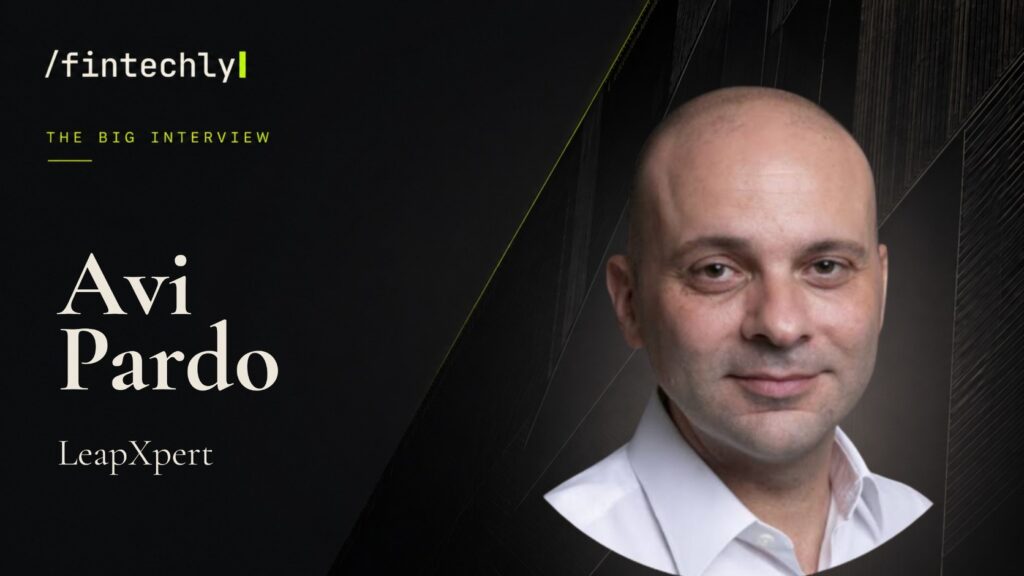
For co-founder and chief business officer Avi Pardo, the money is less a milestone than a starting gun.
“We’re just getting started,” he says. “The world is changing dramatically – the way we communicate, the way we collaborate, the way we can do more every day and every hour. Honestly, we’re just warming up.”
A behaviour the enterprise couldn’t see
Pardo and his co-founders launched LeapXpert in 2019, drawing on years spent in enterprise communication, compliance and collaboration. The founding thesis was a plain observation about behaviour: people were migrating from email and phone calls to messaging, picking up their mobiles and chatting far more often. That shift, the founders reasoned, created a problem enterprises were not equipped to handle.
“How do you manage the user? How do you comply in this environment? How do you keep records?” Pardo says, recalling the early questions. “And potentially, later on, this data can be very valuable.”
The immediate driver was regulation. Financial services, where record-keeping obligations are strictest, became the company’s proving ground, and remained its core for years. But the underlying trend was broader than any one sector. Work from home, and then work from anywhere, pulled employees out of the office where communication had always been easy to oversee.
“That started the situation where employees were not in a fixed place anymore,” Pardo says. “You need to govern and control what’s happening outside your traditional office barriers.”
LeapXpert has since been named a Visionary in the Gartner® Magic Quadrant™ for Digital Communications Governance and Archiving two years running, made the Deloitte Technology Fast 500 in 2024 and 2025, and joined the Financial Times’ 2026 list of the fastest-growing companies in America. It remains headquartered in New York, with staff on the ground in the UK among other markets.
From compliance problem to gold mine
What has changed most, Pardo says, is not the problem but what can now be done with the data the problem produces. For most of the company’s life, the conversation with customers was about oversight – capturing and controlling what employees said. In the past couple of years, artificial intelligence has reframed it.
“For the first four to five years it was mainly compliance and risk management,” he says. “In the last couple of years, with the AI boom, the discussion is evolving into: what can we do with this data? How can we be more intelligent around it? How can we do more?”
Pardo is blunt about what the company is dealing with. Every seller, lawyer and procurement officer inside an enterprise is now doing business over messaging with parties outside it, generating a continuous stream of text and metadata.
“There’s a lot of valuable data there that you can use – for monetisation, productivity, security,” he says. “It’s like a gold mine of information.”
It is that reframing, from a compliance cost into a strategic asset, that the investors are backing. Portage Ventures general partner Ricky Lai described LeapXpert as sitting at the centre of one of the largest untapped sources of enterprise intelligence: trusted, governed customer conversations. Riverwood framed its investment around the same progression Pardo does – from software that archived conversations, to software that governed them, to software that now puts AI to work inside them.
Real use cases, not the AI conversation
Pardo is conscious of how crowded the AI conversation has become, and is keen to set LeapXpert apart from the noise. His argument rests on a claim of proof rather than promise: the company already has paying customers, across several verticals, running live on the platform.
“The industry is talking about AI day and night,” he says. “What we believe are really, really real use cases, because we already have the customers using our platform. We’re in a very unique position to show the world what can be done.”
Pressed on what “understanding and acting on” governed conversations looks like in practice – a phrase lifted from this week’s funding announcement – he runs through a sequence of examples. Because the platform can see the messages moving between an enterprise and the outside world, he argues, it can identify a customer’s intent to buy, help a seller frame the best response to a question, generate quotations automatically, assist with the mechanics of a deal, or surface information from a knowledge base.
The richness, he says, comes from the medium itself.
“There’s a lot of text and a lot of metadata involved. You even know how fast people open a message, how long it took them to read it,” he says. “It’s a very rich environment.”
But he is careful about how far he takes the ambition.
“We are not replacing the humans,” he says. “We’re just putting them on steroids and boosting their capabilities. That’s how we look at things.”
One product, different reasons to buy
LeapXpert now serves three main segments – financial services, the public sector and the wider enterprise market. Pardo says the product is the same in each; what changes is the reason customers come to it.
In banking, the driver is compliance: institutions need a record of every correspondence between a banker and a client. Government, which Pardo describes as the company’s fastest-growing segment, is driven by law rather than financial regulation.
“You may ask yourself, why government?” he says. “By law, governments are supposed to be trusted. Every correspondence between an official and anyone else needs to go into public archives, to later be revealed by reporters or by auditors.”
The third wave is the general enterprise, where the motivation is self-governance. No publicly traded company, Pardo says, can be comfortable with part of its external communication happening over channels it cannot see or record.
“Just imagine procurement people sourcing and buying – you need to be able to trace back promises and quotes,” he says. “Or HR people offering contracts to potential employees. You want a record of all of it. It’s the same platform, the same product, but the use cases are a bit different depending on the type of customer.”
Where the map goes next
LeapXpert’s raise is intended to do two things: extend the platform’s capabilities around what Pardo calls enterprise governed intelligence – the ability not just to capture conversations but to understand and act on them – and take the company into new markets.
On geography, Pardo confirms LeapXpert is opening an office in Germany, describing it as part of a deliberate push into strong financial hubs and markets with demanding governance and transparency regimes. The company already provides services in around 50 countries, coverage that, Pardo notes, means its solution has been accepted by regulators in each of those markets.
“It’s always evolving. There are new laws, new regulations, and we keep ourselves on top of it,” he says. “But it comes with a very good understanding of where we are.”
The company is moving into a growth stage after its Series A and B rounds, Pardo outlines, scaling from a business anchored in the US, UK, Singapore and Hong Kong towards Central Europe, South Asia, North Asia and South America. Beyond Germany, he lists Europe, the Middle East, Asia, Australia, New Zealand and South America as regions in its sights, with the emphasis varying by market between financial services, enterprise and the public sector. By his account, the volume of opportunities in the enterprise and government segments is now growing by hundreds of per cent.
Some of the funding will go towards senior hires. The company plans to add leaders across go-to-market, product and its AI initiatives – the last of which, Pardo says, is where much of the next year’s news will come from.
Just getting started
For Pardo, the thread connecting the compliance business the company began with and the AI ambitions it is now funding is straightforward: LeapXpert manages a genuinely important slice of enterprise data – all of an organisation’s external communication – and can build on top of it.
“That’s why we raised so much money,” he says. “It’s not just to maintain our growth in our traditional capabilities, but to capture the opportunity AI represents in an environment we already operate in. That’s also why Riverwood believed in us – in our governance capabilities, and the opportunity to enable AI on top of them for productivity, risk management and monetisation.”
There will, he promises, be more on both fronts over the coming year: new AI use cases, and further expansion.
“There will be a lot of news from us around AI, with real use cases,” he says. “And a lot of news around our expansion.”
Then, returning to where he began: “We’re just warming up.”