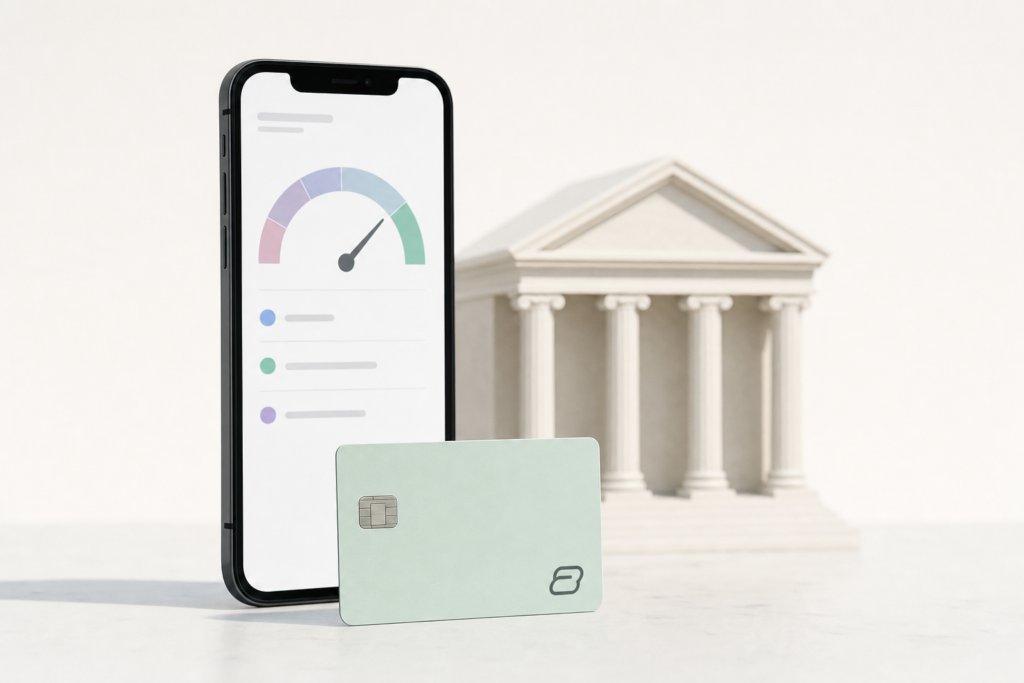
Experian launched a new credit bureau for bank transaction data on 6 October 2026, letting US lenders score borrowers on cash flow rather than a credit file alone. The move signals that cash flow underwriting, once a niche fintech practice, is becoming standard infrastructure across mainstream consumer and small-business lending.
How cash flow underwriting works inside Experian’s new bureau
The Cashflow Data Bureau operates as a separate consumer reporting agency regulated under the Fair Credit Reporting Act, according to Experian’s own announcement of the bureau. With a borrower’s consent, it connects to a bank account, classifies transactions with a machine-learning tool called Cashflow Categories, and produces a Cashflow Score or a blended Credit and Cashflow Score that a lender can plug into an existing underwriting workflow. A separate product, Cashflow Attributes, reads business bank transactions for commercial lenders.
Experian frames the bureau as a response to a gap in the credit system. The company cites Federal Reserve Bank of New York research estimating that nearly one in five US consumers lack access to credit or carry damaged credit, and a survey of 2,000 American adults it commissioned in July 2026 found three in five people previously denied credit, or offered worse terms, believe a lender weighing their recent income and bank activity would have reached a different decision. Jeff Softley, chief executive of Experian North America, said the bureau is “making it easier for our clients to adopt these insights with confidence and at scale.”
Experian says pairing cash flow data with a conventional credit score can lift predictive performance by up to 40 per cent, measured by the GINI coefficient lenders use to judge a scoring model’s accuracy, and can let a lender approve up to 25 per cent more applicants without loosening its risk tolerance. Craig Focardi, principal analyst at research firm Celent, said in the announcement that cash flow underwriting programmes across the industry are “still scaling,” and that a packaged, end-to-end product can shorten how long a lender takes to put one into production.
Because the bureau is a CRA under the Fair Credit Reporting Act rather than an internal lender tool, it carries the same baseline statutory obligations as a traditional credit bureau: a consumer can request what the bureau holds on them, dispute a transaction it has classified incorrectly, and have an error corrected. Experian’s announcement does not change those underlying rights. It extends them to a category of financial data, bank transaction history, that a conventional credit file has never captured.
Plaid’s plumbing already underpins the model
Experian did not build this from scratch. In June 2025, Experian and Plaid announced a partnership covering the plumbing behind the Cashflow Score: with a consumer’s consent, Plaid’s own consumer reporting agency assembles a Consumer Report from up to two years of bank transaction history, drawn from a network of more than 12,000 financial institutions, and passes it to Experian, which returns a Cashflow Score on the same 300 to 850 scale as a conventional credit score. Plaid said its connectivity already reaches one in two US bank account holders.
Scott Brown, group president of financial services at Experian North America, said the aim was to make “real-time cashflow data and insights more accessible to drive greater financial inclusion,” calling the partnership “just the beginning.” Eric Sager, Plaid’s chief operating officer, said cash flow insights alongside a traditional credit file “are becoming essential for lenders.”
Cash flow data is becoming shared lending infrastructure
Experian is not the only company building this into mainstream risk systems. In May 2026, fraud and identity verification provider Socure said it had integrated Prism Data’s CashScore into its RiskOS decisioning platform, making cash flow analytics available to every RiskOS customer from their existing dashboard rather than as a separate add-on. Socure said the integration returns a risk decision in under a second and needs no new infrastructure on the lender’s side.
Johnny Ayers, Socure’s founder and chief executive, said its customers are “looking for every possible advantage to make more precise decisions without adding operational drag.” Jason Rosen, founder and chief executive of Prism Data, said cash flow intelligence “is no longer optional for consumer and SMB lenders.” Socure said its platform processes five billion identity and risk decisions a year for more than 3,000 customers, including 18 of the 20 largest US banks, giving Prism Data’s scoring tools a route into lenders who were not already Experian or Plaid customers.
What it means for thin-file and credit invisible borrowers
Fintechly has previously covered how alternative credit scoring is narrowing the US credit invisible population through mortgage-specific models such as VantageScore 4.0. The Experian, Plaid and Socure moves are a related but separate shift: rather than changing which score a mortgage lender pulls, they change what data feeds into underwriting the moment a consumer credit card, personal loan or small-business application is reviewed.
None of the three companies has published a breakdown of approval or default-rate outcomes specifically for thin-file or credit invisible applicants under these programmes. Each frames cash flow data as additive to a traditional credit file rather than a replacement for one, and all three still require the borrower’s own consent to connect a bank account before any data moves.
The shift sits alongside Fintechly’s earlier reporting on how younger borrowers’ financial habits are creating a separate access gap that a credit file alone does not capture.
A fuller list of active US lenders and credit infrastructure providers working in this space is on Fintechly’s lending sector directory.