

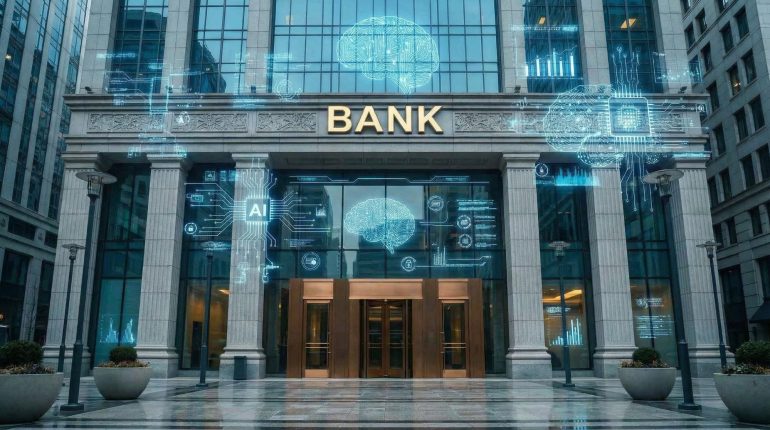
The financial services industry stands at the precipice of a fundamental shift, not just in technology, but in the very definition of labour and value. For the past decade, “digital transformation” often meant better interfaces and smarter analysis.
At the time of writing, the sector is witnessing the transition from generative AI, which creates and summarises, to agentic AI, which decides and executes.
Agentic tools are not passive things waiting for a prompt; they are autonomous operators capable of stringing together complex workflows, from resolving customer disputes to executing cross-border payments.
This article explores how fintech leaders are moving beyond the hype of chatbots to deploy agents that function as proactive infrastructure. It has been made possible through deep research and insightful contributions from experts in the field.
Drawing on insights from industry executives and data from leading research firms, the analysis examines the operational, commercial, and strategic implications of “hiring” AI. As the era of the passive assistant fades, the era of the autonomous agent begins, promising unprecedented speed, scale, and efficiency for those bold enough to adapt.
The activation imperative
In the high-stakes world of fintech, the novelty of conversing with an AI has worn off. The metric for success is no longer how human the AI sounds, but how rapidly it delivers a tangible outcome.
“In the future of agentic AI in fintech, success isn’t going to be measured by complexity, it’s going to be measured by how quickly users see value,” says Josh Pantony, CEO at Boosted.ai. He argues that activation is the critical hurdle: “That happens when an AI workflow delivers insight or action within seconds of first use. For fintech platforms, those initial moments are going to be key retention metrics and indicative of whether your users stay or churn.”
This shift requires a change in design philosophy. Rather than waiting for a user to query a database, the most effective agents will be those that work invisibly.
As Pantony notes, “Tomorrow’s fintech agents will work proactively in the background, continuously monitoring markets and workflows, surfacing the right things at the right time. Anything that interrupts the delivery of persistent, agentic value, even momentarily, effectively becomes competition.”
From reactive chatbots to proactive AI agents in fintech
The industry is moving away from the “reactive” model, where a bot waits for a user to ask a question, to a “proactive” model. In this new paradigm, the AI anticipates customer needs before they even log in.
“The promise of agentic AI in finance is not just smarter analysis, it’s repeatable, self‑running workflows that never stop watching,” Pantony adds. “They are executing the tasks users need done consistently and reliably. That’s what keeps users engaged day over day and turns fleeting usage into long‑term retention.” This persistence transforms the banking application from a utility that is visited occasionally into an active partner that operates continuously.
Beyond hyper-personalisation
For years, the “holy grail” of digital banking was hyper-personalisation, delivering the right offer to the right customer. Agentic AI leaps over this milestone entirely, moving from suggesting an action to taking it.
“We’re moving beyond hyper-personalisation toward truly agentic AI-systems that don’t just tailor experiences, but act on behalf of customers to resolve their needs autonomously,” explains Dimitri Masin, Co-Founder and CEO at Gradient Labs.
Masin highlights a staggering prediction from Gartner: by 2029, agentic AI is expected to autonomously resolve 80% of common customer service issues without human intervention. This is not merely about deflection; it is about resolution. “The shift from ‘hyper-personalised’ to ‘hands-on, proactive AI’ will redefine what trust and efficiency mean in customer operations,” Masin adds. These agents will handle “everything, including executing payments, resolving disputes, and managing compliance checks in real time.”
Case study: the operator model in SME finance
The distinction between AI as a “tool” and AI as an “operator” is most evident in complex sectors such as SME lending. Ciaran Burke, Co-founder and COO at Swoop Funding, sees Agentic AI as the bridge between data and capital.
“We’re moving from AI that explains options to AI that actively orchestrates outcomes,” Burke states. In the context of Swoop, this means agents are “pulling financial data, assessing eligibility, selecting the right product, and crucially progressing the application end to end.”
Burke emphasises that value is unlocked when AI is embedded as infrastructure rather than just a front-end feature.
“It would be that we can have agents that are continuously monitoring a business’s financial position, anticipating funding or saving opportunities and act on them autonomously and automatically.” This “operator” model reduces friction, effectively giving every small business a 24/7 CFO that actively hunts for better rates and liquidity.
The scale of the “digital workforce”
The implementation of these “operators” is already yielding complex data that challenges traditional staffing models. A prime example is Klarna, the payments giant, which recently revealed that its AI assistant is doing the equivalent work of 700 full-time agents.
According to Klarna’s reports, their AI agent handles two-thirds of all customer service chats, has led to a 25% drop in repeat inquiries, and is estimated to drive an additional US$40 million in profit in 2024.
Crucially, customer satisfaction scores remained on par with human agents. This validates the industry’s trajectory: the sector is not just automating tasks; it is automating roles.
The rise of agentic commerce
As these agents become more capable, they will begin to mediate the relationship between consumers and merchants. This phenomenon, known as “Agentic Commerce,” presents both massive opportunity and significant risk for banks.
“As consumers integrate AI platforms into their daily lives, the entire shopping and financial services journey is beginning to migrate with them,” observes Dina Vardouniotis, CEO and strategic consultant of Payments+Partnerships. She notes that agents will soon “curate recommendations, manage comparisons and execute purchases within user-defined guardrails.”
The economic stakes are immense. McKinsey’s Global Institute projects that generative AI could create $200-$340 billion in incremental value per year in banking alone.
At the same time, Vardouniotis warns of a battle for ownership: “Recent legal disputes between major marketplaces and AI platforms highlight an emerging question: who ultimately owns the consumer relationship in an AI-mediated world?”
Navigating disintermediation risks
Vardouniotis’s warning touches on a critical strategic vulnerability. If an AI agent, developed by a tech giant, decides which credit card to use or which loan to apply for based on “optimised” parameters, the bank’s brand visibility could vanish.
“Financial institutions must anticipate how brand visibility, loyalty programmes and even revenue models… may be interpreted or intermediated by AI agents,” Vardouniotis advises. Banks that fail to map their place in this “AI-first customer journey” risk becoming dumb pipes, processing transactions for agents who own the customer loyalty. “Companies should proactively map where they belong in this AI-first customer journey to preserve relevance and ensure AI functions as an extension of their brand rather than a new layer of disintermediation.”
The “hiring” mindset
The consensus among forward-thinking executives is that the time for “pilots” is ending. Rutao Xu, Founder & COO at TaoApex, frames the next two years as a period of aggressive workforce transformation.
“Chatting with AI is 2024. Hiring AI is 2026. Fintech’s future isn’t tools, it’s autonomous employees,” Xu asserts. The numbers support this urgency. The market for AI agents in financial services is projected to grow from $1.79 billion to $6.54 billion by 2035.
Xu points to early movers such as Ant International, which launched agentic payment solutions to streamline cross-border settlements, and ANZ, which has deployed agentic AI in institutional banking to manage complex data workflows. “The use cases,” Xu notes, are transformative: “Fraud detection with 40% fewer false positives. Credit underwriting in seconds, not days.”
The economic forecast for 2028 in a world with agentic AI
The broader market data reinforces Xu’s timeline. Capgemini’s Research Institute estimates that AI agents could generate up to $450 billion in economic value by 2028. Furthermore, Gartner predicts that by that same year, 33% of enterprise software will include agentic AI, up from less than 1% in 2024.
This explosion in value is driven by the shift from “human-in-the-loop” to “human-on-the-loop” architectures. In the latter, humans set the strategy and guardrails, while agents execute the tactics 24/7.
As Xu bluntly puts it: “Fintech companies waiting are corpses… The future, autonomous employees working 24/7, infinite scale. Only question, hiring them or competing against them?”
Conclusion: fintech infrastructure for the autonomous future
The transition from chatbots to agents represents the maturation of AI in banking. It is a move from passive analysis to active execution, from answering questions to solving problems.
For fintech executives, the mandate is clear: build the infrastructure that allows these agents to operate safely and effectively, or risk being disintermediated by competitors who do.
As Josh Pantony summarised, the promise is “repeatable, self‑running workflows that never stop watching.” In an industry defined by risk and speed, the bank that never sleeps will be the bank that wins.